How Failure-to-Success Stories Teach Teams to Come Back Stronger
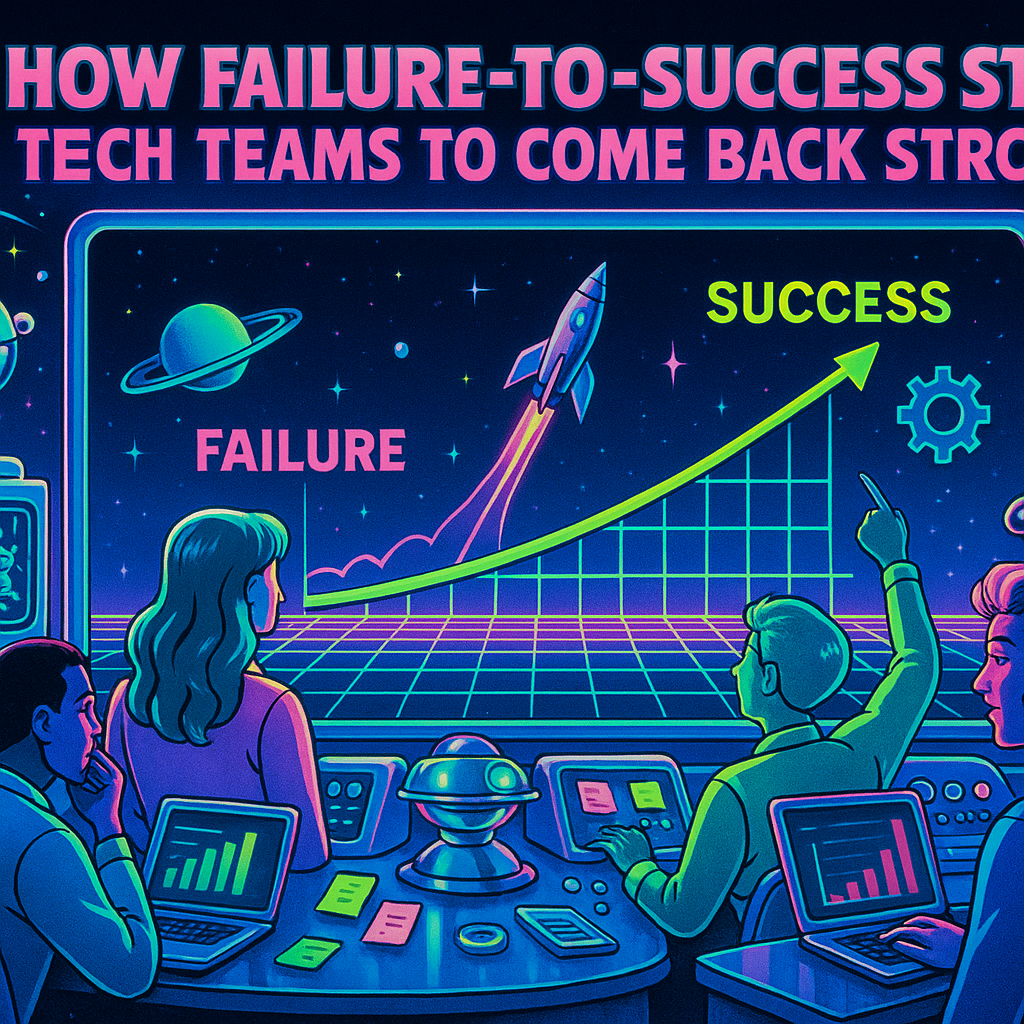
How Failure-to-Success Stories Teach Teams to Come Back Stronger
I watched a small product team burn through an entire year of runway on a launch that cratered in week two. Investors quieted, morale sank, and customers shrugged. Two years later the same team ran a profitable product line with half the budget and twice the growth rate. That arc from disaster to durable success is the pattern I call failure-to-success stories.
Failure-to-success stories matter because they reveal what actually changes after a setback. Many people treat failure as an endpoint. These stories treat failure as diagnostic data. They show how to reorganize incentives, shift focus, and rebuild capability so that loss becomes a predictable input for future wins.
Reframe failure as a specific signal, not a judgement
Too often leaders make failure mean "we are incompetent". That judgment freezes teams. Better leaders treat failure like telemetry. Ask: what exactly failed, at what time, and under what assumptions?
When you refine failure into a set of clear signals you can act on, the first practical move appears. Did you overestimate demand? Under-invest in onboarding? Misread pricing elasticity? Turn vague despair into three measurable hypotheses and you have a path forward.
How to extract useful signals
Run a short, structured post-mortem. Limit it to two questions: what did we assume that was wrong, and what evidence would have exposed that earlier? Keep it under 90 minutes and make it blameless. The goal is to convert emotion into evidence.
Pivot with constraints: reduce scope, not ambition
Many comebacks succeed because teams constrain themselves after failure. They cut the product to its core value and test that with real customers. Constraining scope forces clarity about what matters.
A good pivot answers three fast questions: which feature most directly delivers value, who will pay for that value today, and what is the smallest experiment to prove it. Make the next release a focused experiment, not a relaunch. Experiments return feedback quickly. Fast feedback reduces the cost of being wrong again.
Rebuild trust through small, frequent wins
After a big loss, people need to see consistent outcomes to regain confidence. Small wins create a rhythm of achievement. They also let you iterate on process as well as product.
Design a run of six two-week experiments. Each experiment has one metric and one owner. Publish the results weekly. That transparency restores agency. It also creates a pattern where decisions are judged by data, not by charisma.
Strengthen decision-making muscles, not just processes
Failure often exposes weak decision practices. Teams that recover do two things differently: they collect diverse evidence and they timebox decisions.
Diverse evidence guards against groupthink. Invite at least one dissenting voice and one external perspective when you make a major call. Timeboxing prevents endless re-analysis. Set explicit decision deadlines tied to tests. Good decisions come from better inputs and cleaner cadence.
Practical decision checklist
Use three inputs: data, customer signal, and resource constraint. If data is thin, prioritize the customer signal. If customers are mixed, prioritize resource constraints. This hierarchy keeps decisions practical instead of philosophical.
Re-skill the team where it matters
Sometimes failure happens because the team lacks a capability it assumed it had. The response should be focused re-skilling, not wholesale hiring. Target the capability gaps that emerge from your post-mortem.
If onboarding metrics killed adoption, invest in a sprint to redesign the first 90 seconds of the experience. If pricing confused buyers, run price-config experiments with a controlled cohort. Small, focused training and experiments upgrade skill where the evidence says it matters.
Midway through a comeback, leaders also need to model steady behavior. That includes listening more than talking and prioritizing structure over charisma. Those moves shift culture toward performance instead of optics. For ideas about intentional managerial practices that align teams after setbacks, see this resource on leadership (https://www.jeffreyrobertson.com).
Keep incentives aligned for resilience, not heroics
After failure some organizations reward "heroic saves". That rewards risk-taking without correcting root causes. Better systems align incentives with repeatable processes.
Change short-term incentives to metrics that reflect predictable progress. Reward experiments that delivered learning, not just upside. That reduces the pressure to hide mistakes and encourages early signals to surface.
Closing insight: make the next loss smaller and the next win more certain
The core of every failure-to-success story is the same: teams that recover treat loss as data, constrain their next move, rebuild trust through evidence, sharpen decision practices, and re-skill against the measured gaps. Recovery is not dramatic. It is methodical.
Aim to make the next setback less costly and the next success more repeatable. When you can do that, failure stops being a career-ender and becomes the mechanism that compounds your advantage.
If you leave with one practical step, run a ninety-minute, blameless post-mortem this week. Convert emotion into three testable hypotheses. Design the smallest experiment to falsify each. That single habit moves you from lament to leverage and keeps the team focused on learning, not luck.