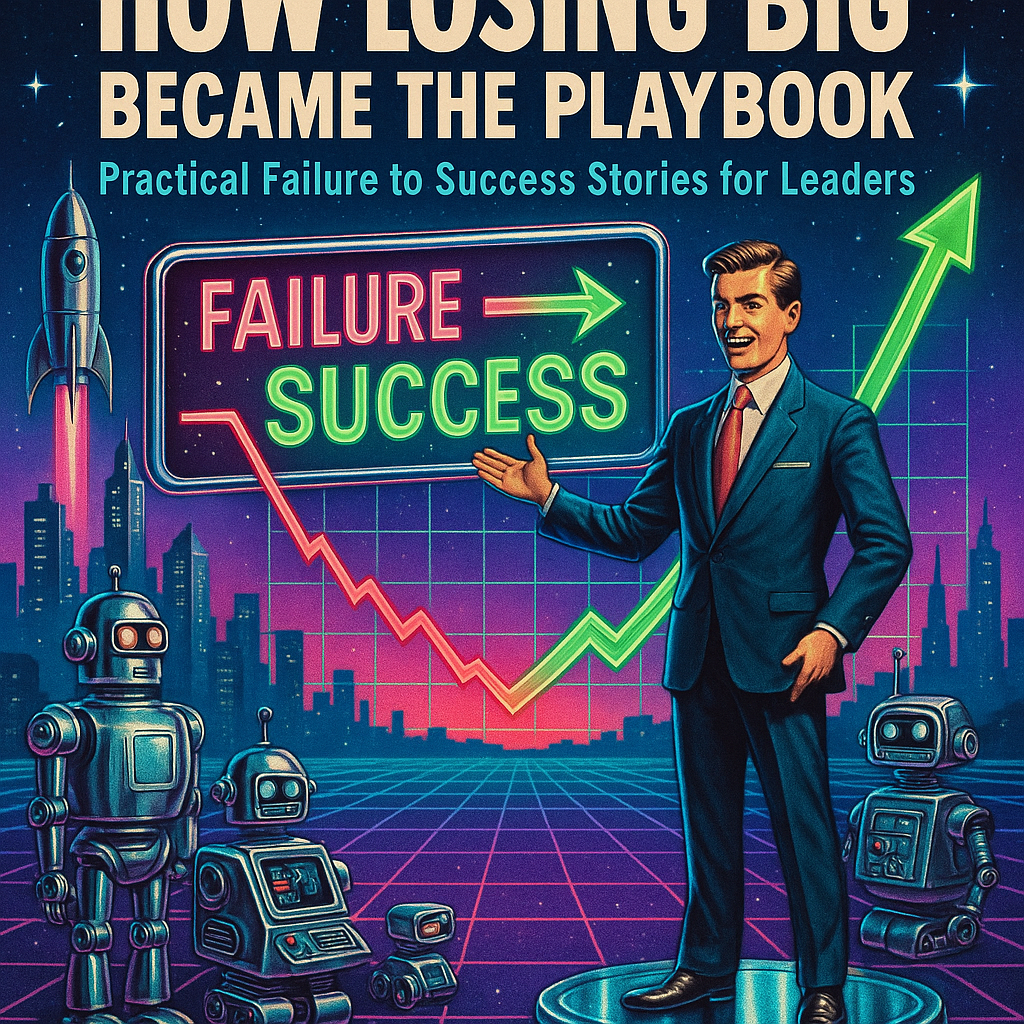
How Losing Big Became the Playbook: Practical Failure to Success Stories for Leaders
The first time a product launch crashed and burned, the team watched metrics fall and morale with it. The CEO took responsibility but didn't have a plan beyond apologies. Six months later the company shipped a simpler, cheaper version that customers loved. That turnaround is one of many failure to success stories where the path to recovery followed predictable, repeatable steps.
Failure to success stories matter because they teach operational habits, not fairy tales. They show what to stop doing, what to start doing, and how a disciplined recovery beats hope. If you run a small or medium business, these lessons save time, money, and reputation.
Frame the loss: separate the incident from the system
When something fails, leaders reflexively look for a single cause. That narrows thinking and encourages scapegoating. The better move is to treat a failure as a data point about a system.
Ask three simple questions: What happened? What allowed it to happen? What stopped us from seeing it earlier? Answering them keeps the conversation focused on process changes rather than personalities. It also makes the recovery actionable.
Document the timeline and evidence. Short, factual timelines reveal patterns you otherwise miss. A single misread metric looks different when it sits beside six weeks of ignored signals.
Rebuild quickly with constrained experiments
One common element across failure to success stories is speed without recklessness. Fast recovery does not mean throwing resources at the same problem. It means rebuilding through constrained experiments.
Define the smallest test that could validate a fix. If a product feature caused churn, prototype the simplified version with a handful of customers. Use explicit success criteria and a fixed time box. This prevents sunk-cost escalation and restores momentum through learning.
Experiments also change the narrative inside the team. Instead of defending past choices, people align around measurable learning. That shift is the psychological foundation for durable comebacks.
Rewire incentives and information flows
Many failures persist because incentives and information channels reward the wrong things. Sales bonuses that emphasize new deals but ignore churn create perverse behavior. Reporting lines that filter bad news create blind spots.
Map incentives against desired outcomes. If retention matters more than acquisition, adjust compensation and KPIs accordingly. Make bad-news safe to report. Leaders who reward candor get earlier warnings and more options.
This is where stronger leadership practice matters. Effective leaders create transparent feedback loops and model curiosity about failure rather than defensiveness. For reading on building that cultural muscle, see this resource on leadership (https://www.jeffreyrobertson.com).
Use scarcity to focus, not as an excuse to freeze
After a big loss, teams often make two mistakes. Some scatter resources across too many fixes. Others freeze, waiting for the perfect plan. Both outcomes steal time.
Instead, convert the reality of limited resources into a prioritization tool. List potential fixes and score them by impact, time to learn, and cost. Attack the highest-impact, fastest-learning items first. Delivering one visible win buys time and credibility for longer-term changes.
Prioritization also helps with communication. Share the top three things you are fixing and why. That clarity reduces anxiety and concentrates effort where it matters.
Institutionalize the comeback so the same failure does not repeat
A successful turnaround that depends on heroic effort is fragile. The goal is to bake the comeback into the way you operate.
Translate the short-term experiments into repeatable processes. If you improved onboarding to cut churn, update checklists, monitoring dashboards, and training materials. Automate the data you used to spot the failure in the first place.
Create a lightweight postmortem habit. After each project or launch, document what worked, what didn't, and one change to try next time. Keep these reports short. The point is rhythm, not perfection.
Closing insight: failure is a signal, not a sentence
The stories that matter are not about who fell but about the disciplined responses that followed. Treat setbacks as system signals. Run small, fast experiments. Align incentives and information. Use scarcity to focus action. Convert wins into processes.
When you do these things, failure stops being a scarlet letter and becomes a repeatable source of advantage. That is how losing big can lead to winning bigger.
Leave a Reply